A red dress sets its own rules. Choosing a shawl is not just about matching colors: it involves the material, the drape, the saturation of the fabric, and the overall chromatic coherence of the outfit. We will detail the technical parameters that make the difference between a shawl that enhances and one that detracts.
Color temperature and undertone: the key to pairing a shawl with a red dress

Red is not a single color. A vermilion red leans towards orange, a carmine red towards blue, and a brick red towards brown. The shawl must correspond to the undertone of the dress, not to generic red.
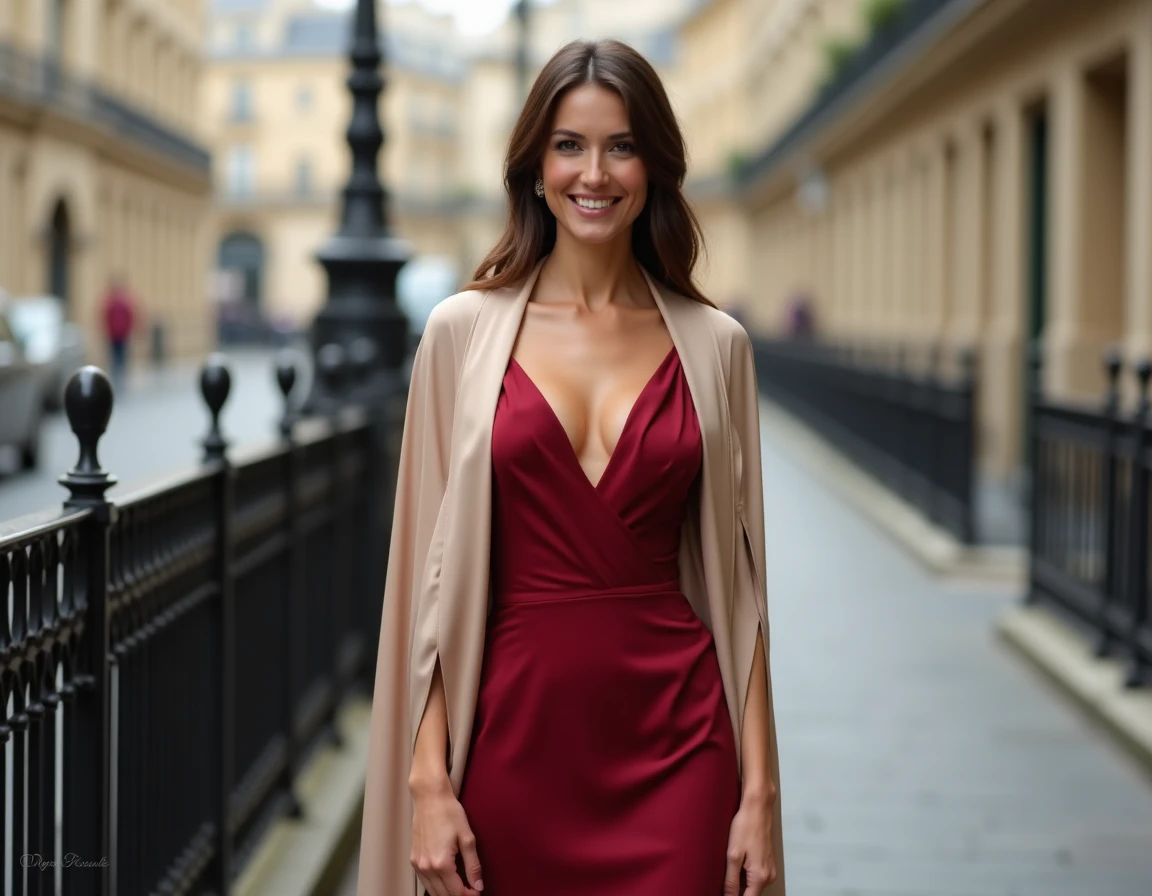
For a warm red (vermilion, poppy, tomato), we recommend warm neutrals like ivory, champagne, or rosy nude. These tones allow the dress to dominate without creating a thermal break in the palette. Pure white, often chosen by reflex, hardens the overall look and creates too sharp a contrast that draws the eye to the shawl rather than the dress.
For a cool red (burgundy, raspberry, carmine), pearl gray, taupe, and greige work better. These muted shades absorb the depth of the red instead of contradicting it. When you are looking to find a red shawl on Blog Too, pay attention to the proposed shades: a raspberry red on a burgundy dress creates a refined monochrome, while an orange-red on the same dress produces a visible mismatch.
Black remains a safe bet on bright reds, but it formalizes the outfit considerably. On a dark red, it weighs down the silhouette. Black works better on a bright red than on a deep red.
Shawl material and dress line: combinations that work
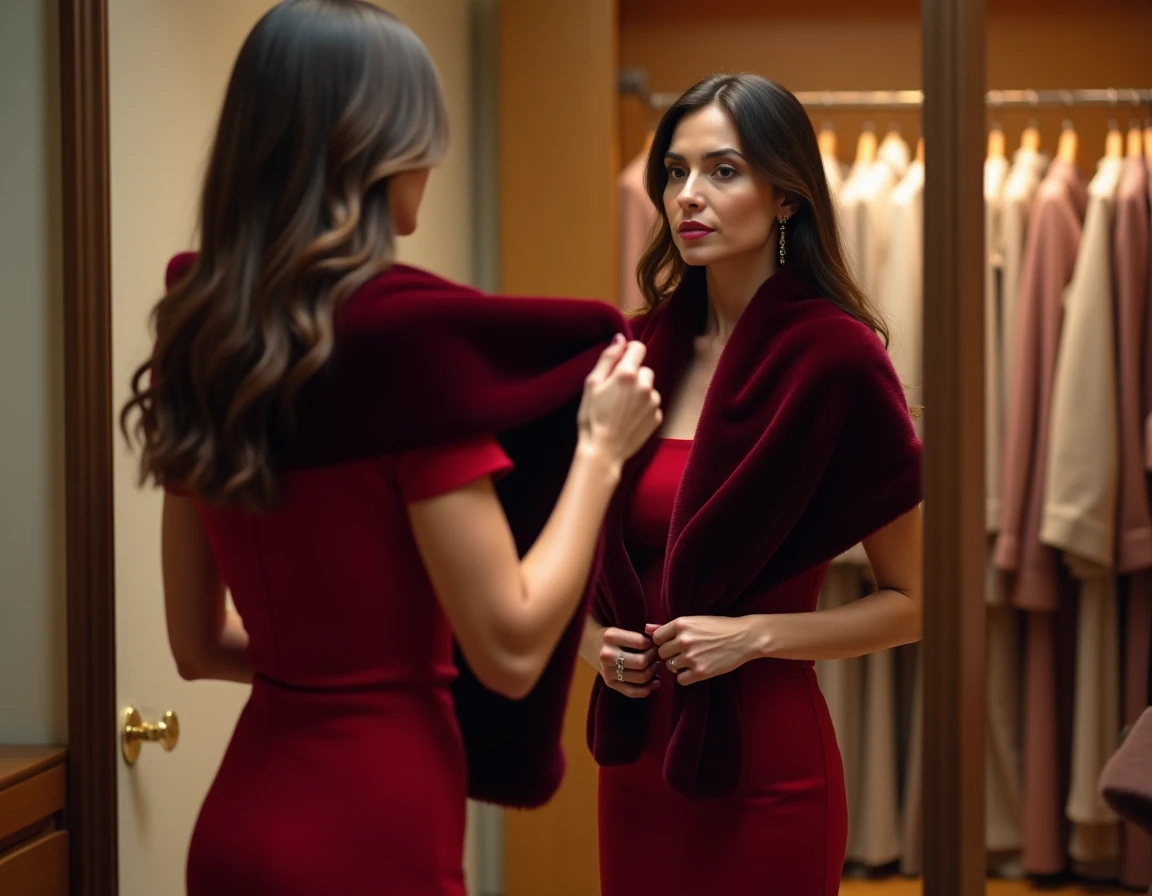
The material of the shawl must correspond to the structure of the dress, not just the season. A common mistake is choosing a thick cashmere shawl for a fluid crepe dress: the added volume at the shoulders disrupts the verticality of the silhouette.
Fluid fabrics for fitted dresses
On a sheath dress or mermaid cut, silk chiffon or organza shawls maintain the line. Their semi-transparency covers the shoulders without adding bulk. The natural drape of these fabrics follows the curves instead of hiding them.
Structured materials for flared dresses
On a trapeze dress or skater cut, a shawl with a bit more structure (wild silk, fine silk-wool blend) rebalances the proportions. The volume at the bottom of the dress accommodates an accessory that has more body at the shoulders.
Here are the material/cut associations to prioritize:
- Red crepe sheath dress: silk chiffon or lightweight satin shawl, draped over the shoulders without a knot
- Red taffeta flared dress: wild silk or fine pashmina shawl, worn as a wide wrap
- Red long jersey dress: fine cashmere or silk-cashmere blend shawl, to compensate for the softness of the jersey with a denser texture
- Red strapless dress: a shawl wide enough to cover the décolletage without slipping, ideally secured with a discreet brooch
Shawl dimensions: width and length according to neckline
The width of the shawl affects the final look more than its color. A shawl that is too narrow on a wide neckline dress appears stingy. A shawl that is too wide on a high-neck dress piles up unnecessary fabric around the neck.
For strapless or off-the-shoulder dresses, we recommend a width of at least 60 centimeters. The shawl then plays a real role of coverage, and its surface allows for elegant draping. The ideal length exceeds two meters to allow for a front crossing or a loose knot.
For short or three-quarter sleeve dresses, a narrower shawl suffices. It rests on the shoulders as an accent, not as a protection. Here, the classic pashmina around 70 centimeters wide offers the best compromise between presence and discretion.
Tying a shawl over a red dress: techniques that hold
Free draping is elegant in photos but impractical in movement. For a long evening or ceremony, securing the shawl becomes a key factor.
The most reliable technique remains the simple pass through the crook of the elbow: the shawl rests on the forearms, with the ends falling on either side. This position frees the shoulders, keeps the décolletage visible, and does not slip when moving the arms. It works particularly well with red dresses with thin straps.
The flat knot in front, at the sternum level, is suitable for fluid shawls on round neckline dresses. It structures the silhouette and creates a focal point that diverts attention from the belly to the bust. However, this knot visually weighs down dresses already loaded with details (embroidery, sequins).
The side brooch on the shoulder remains the safest solution for strapless dresses. It secures the shawl without distorting it and adds a jewelry element that interacts with earrings or bracelets.
Common mistakes with a shawl over a red evening dress
Three traps consistently arise. The first: matching the shawl exactly to the red of the dress. The perfect tone-on-tone eliminates all contrast and gives the impression of a monolithic ensemble, as if the shawl were part of the dress. A subtle nuance shift or a clear transition to a neutral is preferable.
The second: choosing a shawl with busy patterns. Red is already a saturated color that captures the eye. Adding a floral or geometric print creates visual overload. Discrete patterns like a tone-on-tone jacquard fare better than a contrasting print.
The third: neglecting the length of the ends. Ends that are too short, stopping at the waist, cut the silhouette. Ends that drag on the floor hinder walking. The length of the ends should reach between the hip and the middle of the thigh for a stable visual balance.
The choice of the shawl over a red dress hinges on details of undertone, weight, and proportion. A well-calibrated shawl disappears into the ensemble while fulfilling its role. It is precisely when it is no longer noticed that it does its job.