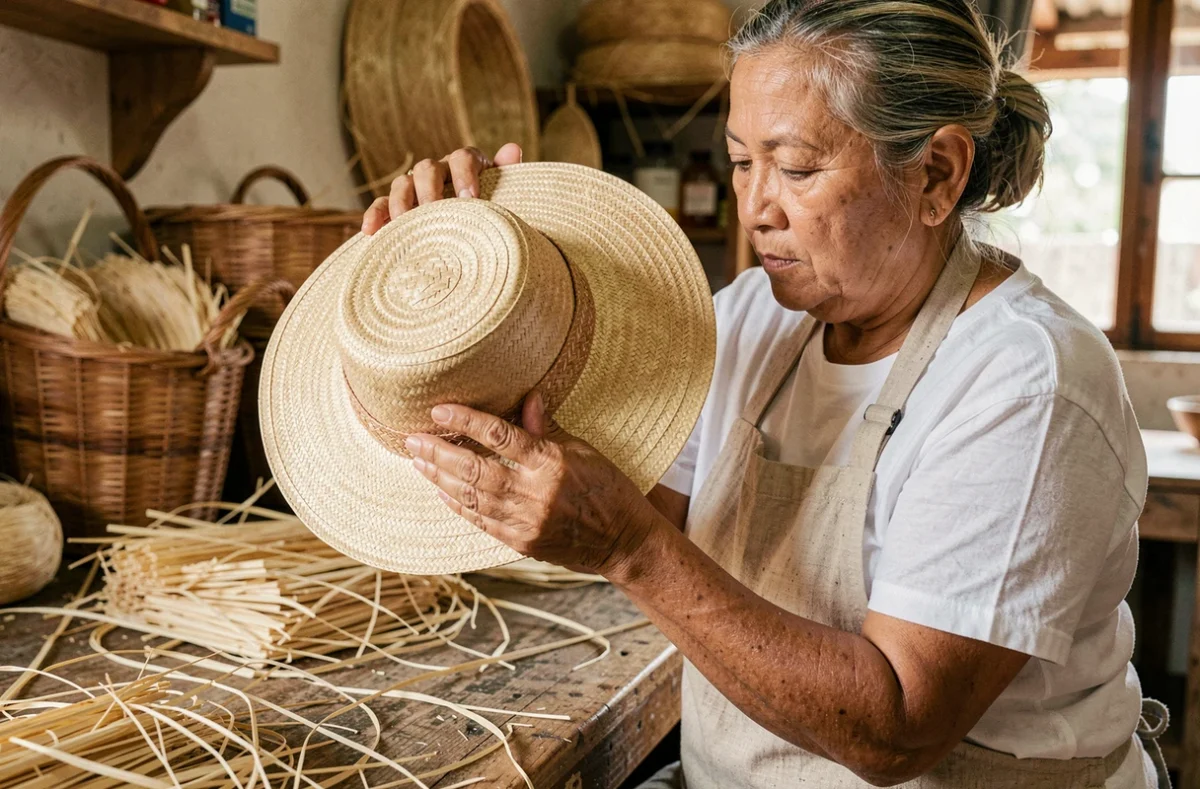
A hat labelled “Panama” may be machine-woven in China, handcrafted in Ecuador, or carry the protected Montecristi designation. All three exist on the market under the same commercial name. To know what you are buying, you need to distinguish the fibre, the method of manufacture and the level of protection the model actually benefits from.
Toquilla straw, Montecristi, commercial name: three levels of authenticity
Confusion around the Panama hat stems from a tangle of names. The term “Panama” does not refer to where the hat is made: the traditional weaving of toquilla straw is an Ecuadorian craft, inscribed on UNESCO’s Intangible Cultural Heritage list in 2012. This recognition applies to a tradition, not to an individual hat.
Beyond this foundation is a more restrictive designation. The “Sombrero de Montecristi” has had a designation of origin recognised in Ecuador since 2009, reserved for fine toquilla straw hats associated with the town of Montecristi, in Manabí Province. A hat can therefore be an authentic Ecuadorian toquilla straw product without being a protected Montecristi.
The third layer is the commercial name. Any manufacturer can put the label “Panama hat” on a hat woven from a different fibre in another country. No international regulations govern the term in a binding way. To identify a genuine original Panama hat, you therefore need to examine the material, the weave and the traceability—not just the name on the label.
| Level | What it guarantees | What it does not guarantee |
|---|---|---|
| Commercial name “Panama” | Nothing verifiable | Neither the fibre, the origin nor the method of manufacture |
| Ecuadorian toquilla straw | Traditional plant fibre, craft recognised by UNESCO (2012) | No required link to Montecristi or minimum weave fineness |
| Montecristi designation (2009) | Origin in Montecristi (Manabí), specific manufacturing conditions | No systematic individual certification for every item sold |
How to recognise toquilla straw by touch and sight
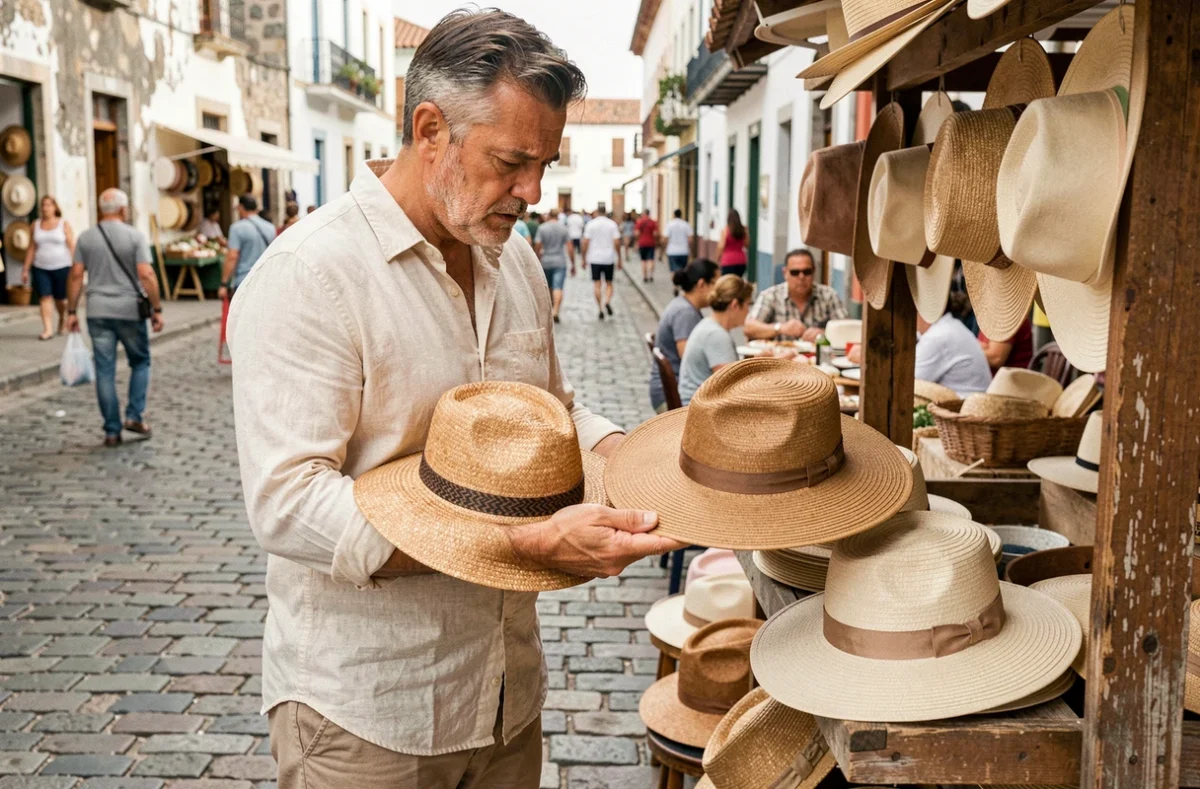
Toquilla straw (Carludovica palmata) has physical characteristics that no synthetic fibre or woven paper can faithfully reproduce. An authentic toquilla hat can be identified by several telltale signs.
- The fibre has a faint plant-like smell, especially when damp, whereas a polyester or paper hat is odourless or smells of plastic.
- When held up to the light, the weave reveals a network of irregular fibres with subtle variations in thickness. A perfectly uniform weave indicates industrial production.
- To the touch, toquilla is supple and slightly waxy. It bends without snapping, unlike woven paper, which creases sharply and permanently.
- The top of the crown (the “rosace” or plantilla) shows where the weaving begins. On a handmade hat, this rosace is an irregular circle of interlaced fibres, never a perfect disc.
You can carry out these checks in a shop with the hat in hand. From an online listing photo, only the rosace and the transparency of the weave can be assessed to some extent.
Counterfeit Panama hats: warning signs to look out for when buying
A heritage label or a mention of origin is not enough to authenticate the item being sold. UNESCO recognition applies to the tradition as a whole, while the Montecristi designation refers to a geographical origin and specific manufacturing conditions. You still need to verify the provenance of the individual hat.
What the seller should be able to tell you
A reputable retailer will provide at least the country of manufacture (Ecuador), the material (toquilla straw / Carludovica palmata) and, for a Montecristi, the town or workshop of origin. If none of this information appears on the product page, that is an initial warning sign.
Common signs of counterfeits
The most common imitations share a few telltale features. The inner band often bears vague wording (“genuine Panama style” or “Panama hat”) with no reference to Ecuador. A very low price for a hat presented as handmade should raise concerns: weaving a genuine Panama hat by hand takes days, and sometimes weeks for finer models.
Colour is another clue. Natural toquilla Panama hats tend towards cream or ivory, with slight variations. A bright, perfectly uniform white suggests chemically treated fibre or synthetic material.
Montecristi and weave fineness: what quality really measures
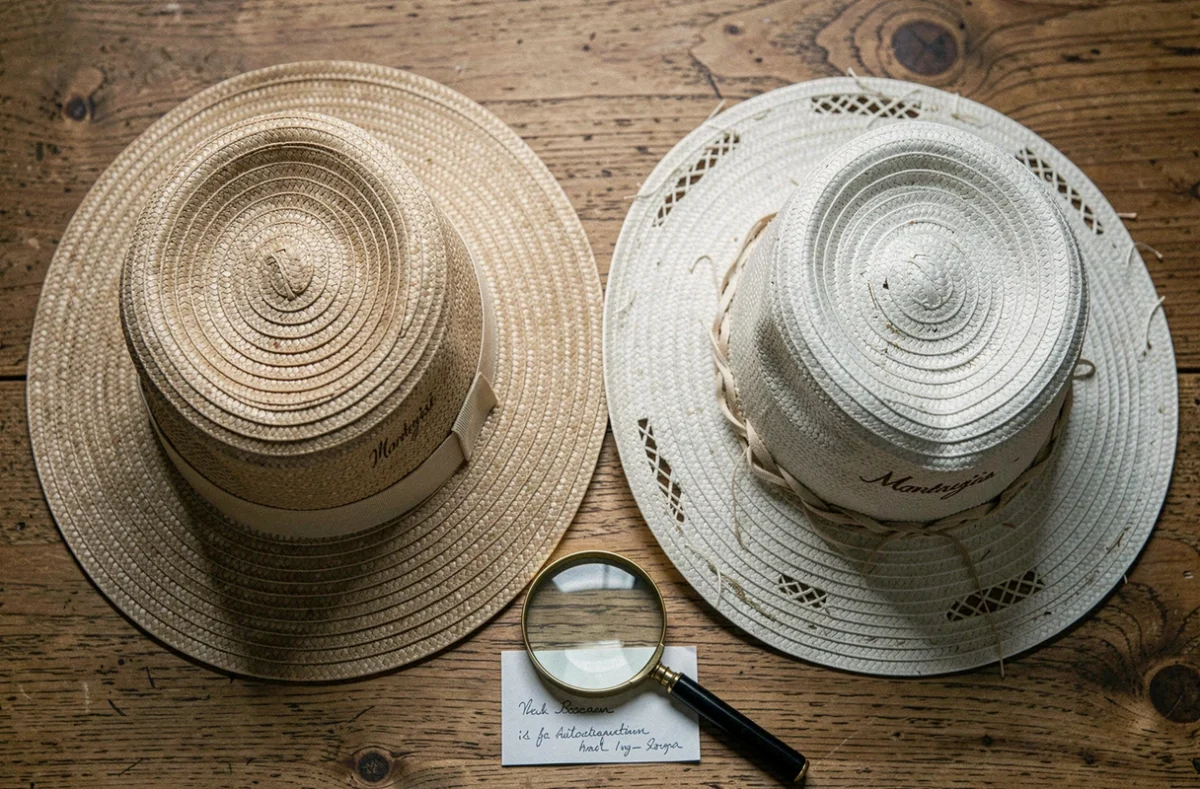
Quality varies considerably among authentic toquilla straw hats. The main criterion is weave density, measured by the number of rows of fibres per square inch. The higher the number, the finer, lighter and more durable the hat.
Common models made for the tourist market have a relatively loose weave. The finest Montecristi hats can take a single artisan several months to make, which explains the considerable price differences between two hats that are both “authentic”.
A simple test is to roll the hat. A well-made Panama hat in fine toquilla straw can be rolled without damage and will return to its original shape. Coarsely woven models and imitations may become misshapen or crack. This test, often highlighted by retailers, indicates the fibre’s flexibility; it is not absolute proof of authenticity.
Documented workshop provenance, combined with a physical examination of the fibre and weave, provides the most reliable set of indicators. No single criterion is enough to guarantee the authenticity of a Panama hat: it is the combination of these signs that helps distinguish an Ecuadorian handcrafted product from a commercial imitation.