A child growing up in a home where meals, homework and evening routines fall to just one parent receives different cues from a child whose parents take turns. Parenting advice often assumes that time is available and tasks are shared fairly.
In reality, the parenting workload remains unevenly distributed, even when both parents work full-time. This article offers practical ideas for families as they are, not as we imagine them to be.
Sharing parenting responsibilities: the prerequisite parenting guides overlook
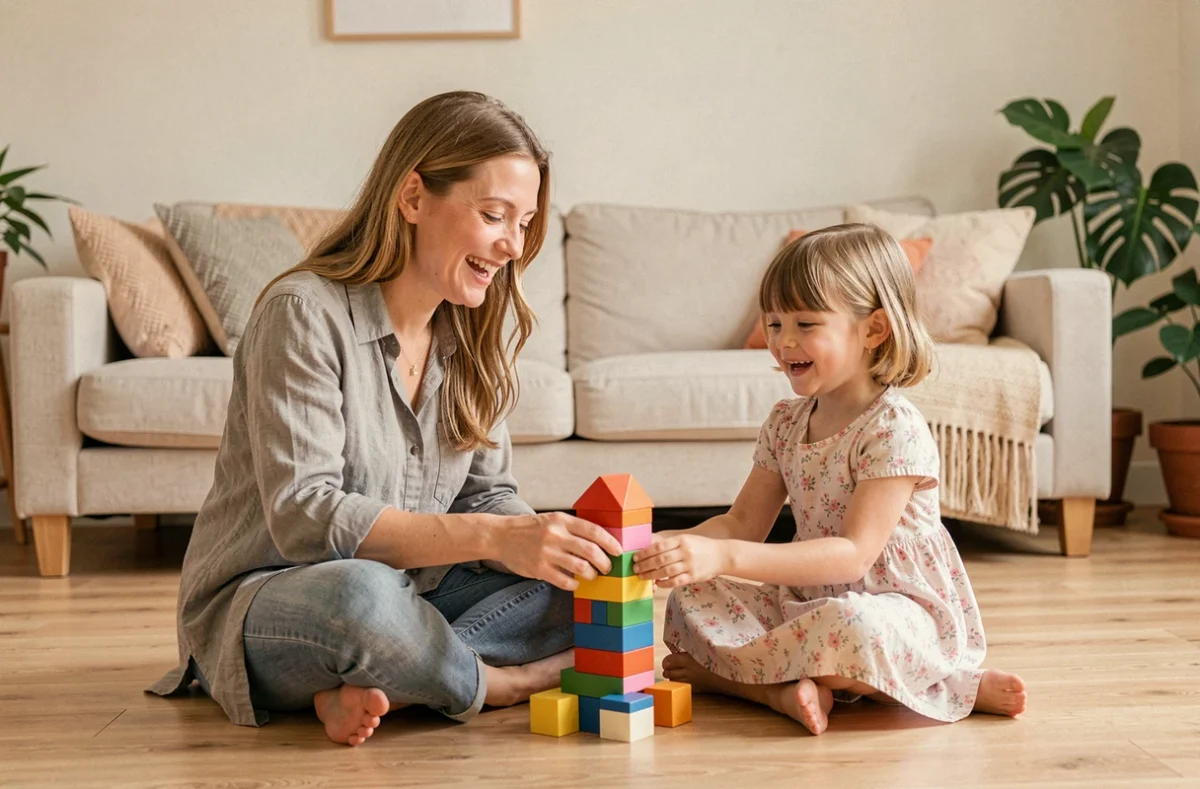
Have you ever noticed that parenting advice assumes there’s an available, calm parent, ready to sit down for twenty minutes and play with building blocks? That parent exists, but they often have a schedule that allows for it—or a partner who handles the logistics at the same time.
Most families deal with an imbalance. One parent carries the mental load (medical appointments, seasonal clothes, activity sign-ups), while the other steps in occasionally. This imbalance isn’t inevitable, but recognizing it is the first step toward changing it.
In practical terms, before putting parenting advice into practice, the question to ask as a couple isn’t “How do we do this?” but “Who does what, and when?” A simple chart posted in the kitchen, with each daily task assigned to someone by name, can change family dynamics faster than a parenting book. You can find more resources on this topic at https://www.parentsetmomes.fr, which brings together articles focused on everyday family life.

Screens and young children: what the law has required since 2025
Since July 3, 2025, children under three have been prohibited from using screens in childcare settings, including with childminders. This is no longer a recommendation but a legal ban in these specific settings.
At home, public health guidance remains the benchmark. The health record updated in 2025 recommends that children aged 3–6 have only occasional screen time, with an adult present and limited to quality content. Labeling an app or video “educational” isn’t enough to justify its use.
Why this distinction matters in everyday life
Many parents think that a cartoon labeled “educational” is time well spent. Official guidance says otherwise: what matters is having an adult there to comment, ask questions and turn screen time into a conversation.
A four-year-old watching an “educational” video on a tablet alone in their room for thirty minutes is not in the same situation as a child watching a short wildlife documentary with a parent who names the animals, asks questions and pauses the video. Adult involvement matters more than the content itself.
Parent-child communication: three strategies that work without taking up extra time
Positive communication methods sometimes assume you can set aside dedicated time: “family talk time” or “Sunday evening meetings.” For families whose days are already packed, these rituals can feel out of reach. The following three approaches don’t require any extra time.
- Describe what you see during existing routines: instead of saying “Hurry up,” say what’s happening (“You’ve put on your socks; now you just need your shoes”). Describing rather than giving orders reduces conflict without making the routine longer.
- Ask an open-ended question in the car or during bath time: “What was the funniest part of your day?” works better than “Did you have a good day?”, which invites an automatic “yes.” These transition moments are already part of the day; you just need to make use of them.
- Offer limited choices to children aged 3–7: giving two options (“Do you want the blue sweater or the green one?”) gives a child a sense of control without starting a fifteen-minute debate. This approach reduces pushback and builds decision-making skills.
None of these practices requires a free Saturday afternoon. They fit into things you’re already doing, making them sustainable over time.

Growing together when circumstances aren’t ideal
The phrase “growing together” suggests a shared journey, with parents and children moving forward at the same pace. Reality is more uneven. A parent exhausted after a day at work doesn’t grow in the same way as a curious child coming home from school with a thousand questions.
Accepting that parents and children move at different paces is a way of showing yourself compassion. A quiet dinner one evening doesn’t erase a week of attentive conversations. Consistency matters more than making every interaction perfect.
Parental guilt as a practical obstacle
When a parent reads an article with parenting advice and realizes they’re hardly following any of it, two reactions are common: guilt, followed by giving up altogether. This pattern is counterproductive.
A more realistic approach is to choose just one strategy each month. For example, for four weeks, replace “Hurry up” with a description of the situation every time. One change, repeated, is more likely to stick than five resolutions made at once.
Families that thrive don’t tick every box in a parenting guide. They’ve identified two or three practices that suit their routine, and they stick with them. The rest can come later—or not—depending on the season of family life.
Family well-being doesn’t depend on a single model. It comes from small adjustments, an honest sharing of responsibilities and the ability to distinguish what’s achievable from what’s ideal. A home where each parent does what they can, mindfully, gives a child a more stable environment than one where parenting ambitions create constant stress.