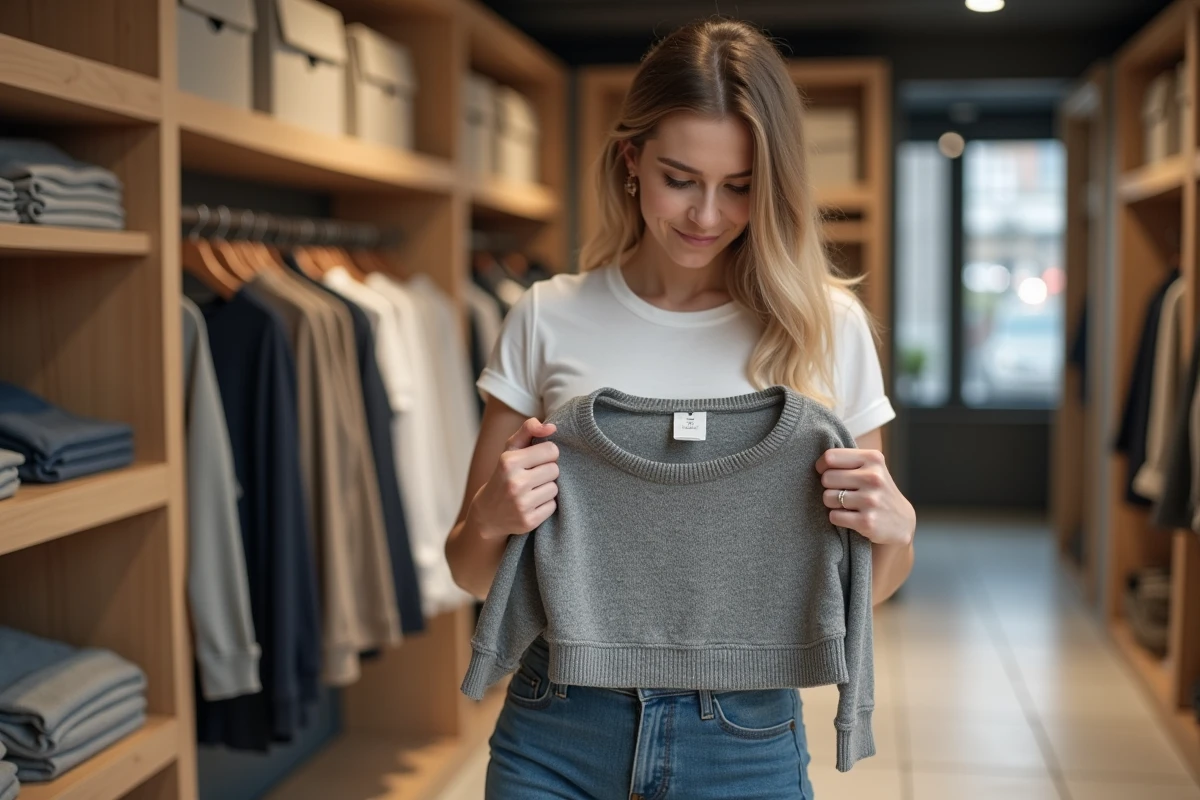
You order an M online, the garment arrives too tight. You take the same cut in L from another brand, and this time it’s loose. Understanding what size L and M correspond to requires going beyond the simple letter printed on the label. This guide provides concrete benchmarks to choose between these two sizes without any unpleasant surprises.
Why the letter on the label is no longer enough to choose your size
The letters S, M, L were designed to simplify shopping. The problem is that each brand defines its own measurement ranges. An M at a fast fashion retailer may correspond to an L at a technical clothing manufacturer.
This instability has been further exacerbated by the oversized trend. Intentionally loose cuts blur the line between M and L: the same letter covers very different patterns depending on the cut. Brands like H&M or Gymshark acknowledge this in their guides and recommend checking the exact measurements of the model before each purchase.
The category of clothing complicates matters even further. An M for a top, a pair of pants, or a jacket does not refer to the same centimeters. Recent guides increasingly distinguish each type of piece, a sign that the letter alone has never been a reliable benchmark. To better understand what size L and M correspond to, you need to start with your own measurements.
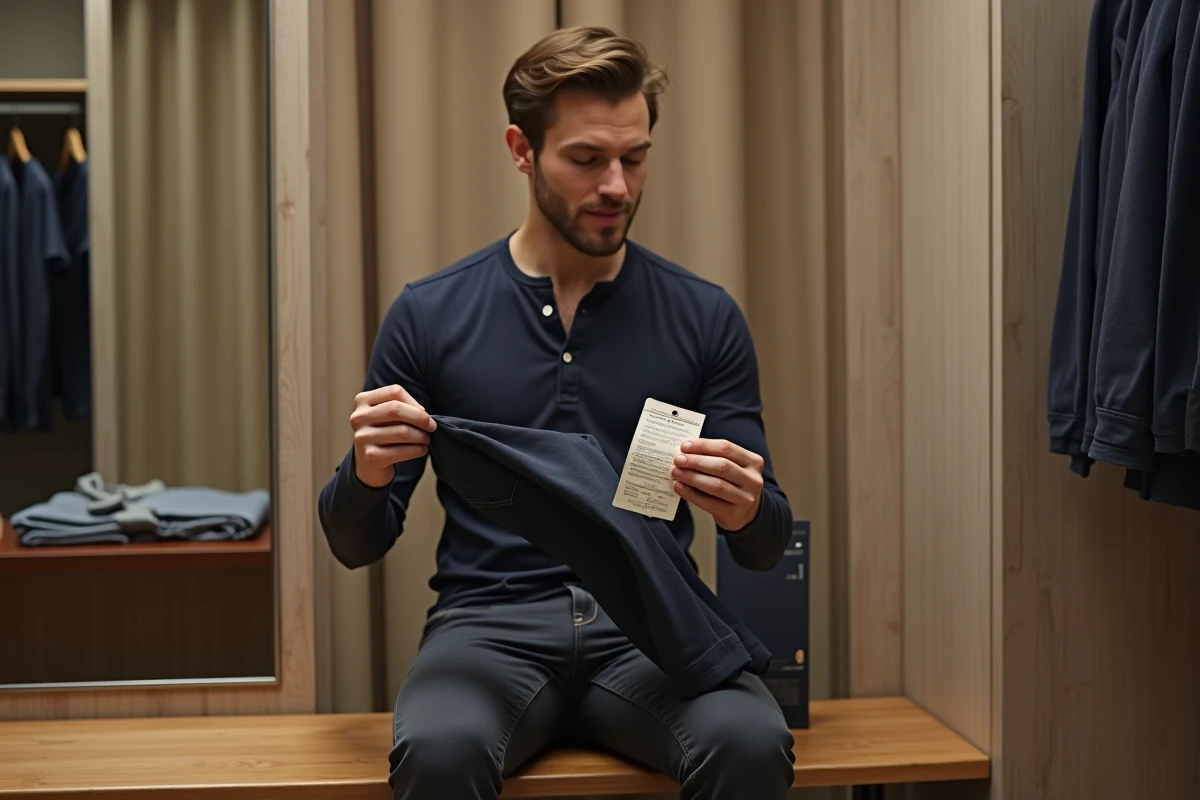
Taking your measurements: the method that changes everything
Before comparing M and L, you need to know three personal numbers. A soft measuring tape and two minutes are enough.
- Chest measurement: place the tape horizontally at the fullest part of the chest, without compressing. Keep your arms down by your sides.
- Waist measurement: measure at the narrowest part of the torso, usually above the navel. Don’t suck in your stomach.
- Hip measurement: place the tape at the widest part of the hips and buttocks, with your feet together.
For pants and technical clothing, the most recent guides also recommend measuring the inseam length. This often-overlooked measurement prevents you from ending up with pants that are too short or bunching at the ankles.
Note these numbers once and keep them in your phone. They will be useful for every order.
M and L size correspondences: reference table for men and women
The values below are indicative ranges. They vary from brand to brand but provide a useful order of magnitude to locate your size.
Women’s correspondences
| Letter size | Chest measurement | Waist measurement | Hip measurement | Indicative FR size |
|---|---|---|---|---|
| M | 88-92 cm | 72-76 cm | 96-100 cm | 38-40 |
| L | 92-96 cm | 76-80 cm | 100-104 cm | 40-42 |
Men’s correspondences
| Letter size | Chest measurement | Waist measurement | Indicative FR size |
|---|---|---|---|
| M | 97-102 cm | 82-87 cm | 48-50 |
| L | 102-107 cm | 87-92 cm | 50-52 |
Have you noticed that your measurements fall exactly between two lines? This is the most common case, and it’s where the choice between M and L requires an additional criterion.
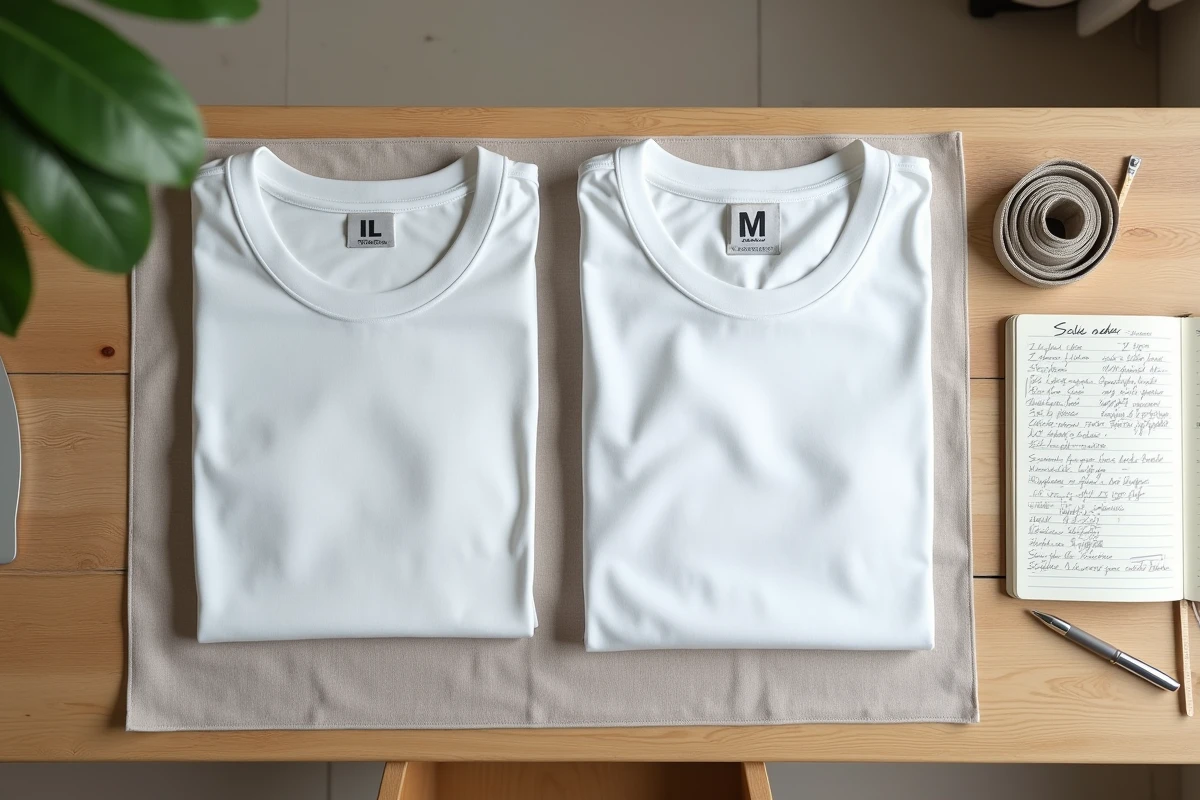
Between two sizes: concrete criteria to decide between M and L
When your measurements are on the border, the letter does not decide. Three practical factors help make the decision.
The cut of the garment weighs as much as your centimeters. A slim model will fit tighter than a straight cut in the same size. If you’re unsure about a slim pant or a fitted jacket, go for the L. For a loose or oversized piece, stick with the M.
The comfort sought depends on the use. A sports garment worn during exertion benefits from not compressing the chest or waist. For an everyday t-shirt, a closer fit may be suitable. Ask yourself: will you be moving, sitting for a long time, layering?
The material also comes into play. A fabric with elastane can accommodate a half-size difference. A rigid cotton or linen will not stretch after washing. If in doubt about a less stretchy material, prefer the size above rather than betting on “it will stretch”.
Adapting your size choice according to the type of garment
An M for a t-shirt is not worn the same way as an M for a jacket. Recent brand guides clearly distinguish categories, and this reflex deserves to be adopted.
For tops (t-shirts, shirts, sweaters), the chest measurement remains the main benchmark. If your chest corresponds to M but your shoulders are broad, try the L to avoid tension at the armholes.
For pants, focus on the waist and hip measurements. The classic trap: choosing based on the waist when it’s the hips that are the limiting factor. Measure both.
For jackets and coats, always account for the layer underneath. A jacket worn over a thick sweater often requires a size larger than a blazer worn over a thin shirt.
Ordering online without size errors
Online shopping concentrates the majority of size-related disappointments. A few reflexes can reduce the risk.
- Consult the size guide specific to the product, not a generic guide found elsewhere. Measurements vary from model to model, even within the same brand.
- Look at customer reviews that mention the buyer’s body type. A comment like “I am 1.75m, 80 kg, the L is perfect” is worth more than a five-star rating.
- Check the return policy before finalizing your order. Ordering two sizes and returning the one that doesn’t fit remains the most reliable method when returns are free.
Sizes M and L are not universal standards. They vary according to the brand, cut, category of clothing, and material. The only stable reference is your own measurements, taken once with a measuring tape and compared to the size guide of the product you are targeting.