
Every year, social media reignites the same debate: which male face will garner the most votes, shares, and heated comments? In 2026, the race for the title of the most handsome man in the world promises to be more competitive than ever, fueled by platforms like Instagram, Threads, and TikTok where fan communities organize real voting campaigns.
The names being circulated come from different continents. Nigerian singer Rema has been nominated by several African media accounts. Indian actor Hrithik Roshan has a fan base that votes methodically, sometimes every hour, on sites like the Shining Awards. Hollywood faces remain present in the lists, perpetuating a long tradition of Western dominance in this type of ranking.
How beauty voting works on social media
You may have noticed those posts asking you to “vote in the comments” or to “search for a name on Google” to validate a vote? This mechanism, far from a scientific survey, relies on community mobilization.
Specifically, an account publishes a photo with a name, a flag, and a call to vote. The final ranking reflects less a global aesthetic consensus than the size and organization of each fanbase. A fan community that schedules hourly reminders will weigh more than a passive audience, even a very large one.
Several formats coexist. Some contests use polls integrated into Instagram stories. Others redirect to third-party sites where each IP address can vote at regular intervals. The Shining Awards, for example, allow one vote per hour until the closing at the end of the year. The result thus depends as much on digital strategy as on the physical appeal of the nominee.
This mechanism explains why the question of who will be named the most handsome man in the world in 2026 generates so much debate: the title rewards organized popularity, not a jury of experts.
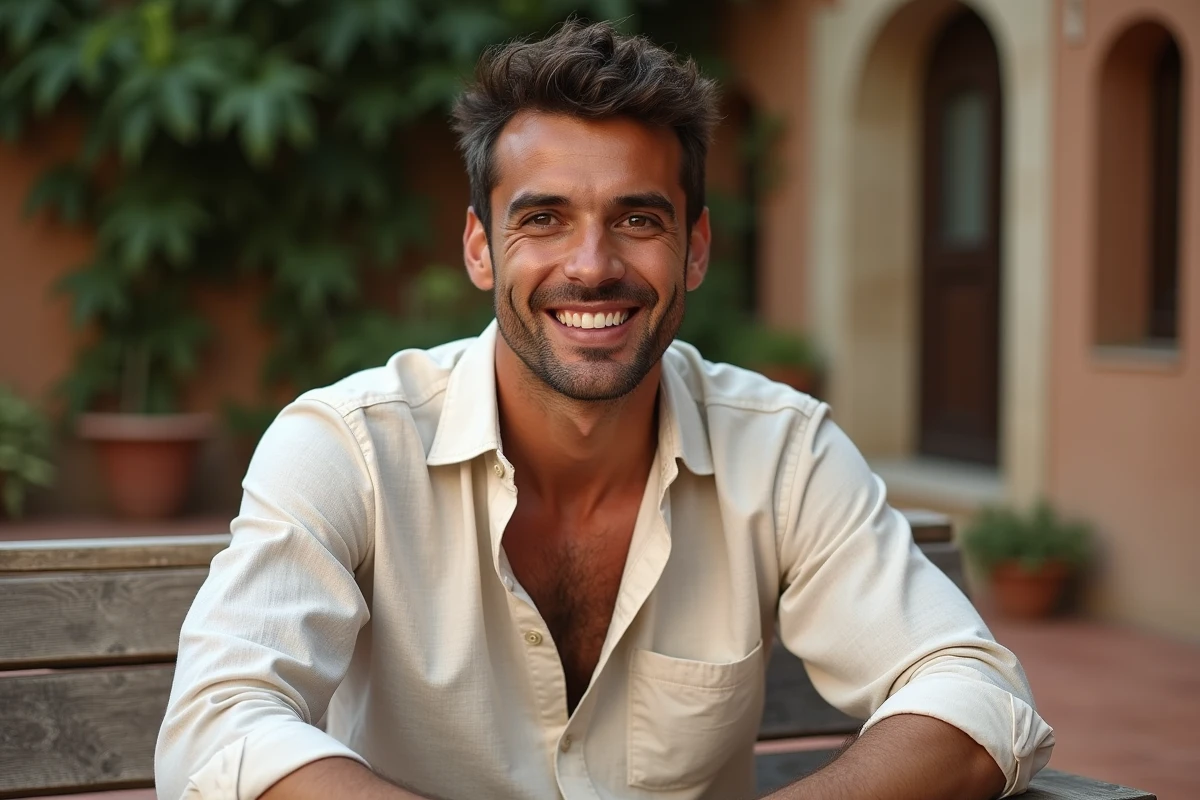
Nominees 2026: varied profiles, uneven visibility
The list of names put forward in 2026 stands out for its geographical diversity. Rema represents Nigeria and afrobeats. Hrithik Roshan carries the colors of Bollywood with a career spanning over two decades. American and European actors also appear in the nominations shared on Threads and Instagram.
This diversity hides an imbalance. Non-Western nominees must exert a more intense mobilization effort to achieve the same level of visibility. A Hollywood actor benefits from massive English-language media coverage, talk show appearances, and articles in celebrity magazines. A Nigerian or Indian artist starts with an audience concentrated in specific linguistic areas.
The result: despite open nominations, the faces that dominate the final rankings often share common traits. Strong jawline, fair complexion, facial symmetry according to proportions coded by the Western entertainment industry.
Masculine beauty on social media: Eurocentric standards despite voting diversity
Why do contests presented as democratic reproduce such homogeneous aesthetic standards? Several mechanisms come into play.
- The algorithms of the platforms favor already popular content. A nominee that generates a lot of engagement in the first hours will be more widely disseminated, creating a snowball effect that benefits celebrities already known to the English-speaking public.
- The visual criteria highlighted (symmetry score, facial proportions, “harmonious” features) rely on benchmarks developed from European faces. These analytical grids, adopted by popularization accounts, normalize a narrow definition of masculine beauty.
- Mainstream media amplify certain results while ignoring others. A title awarded by People Magazine to a Hollywood actor receives global coverage. A massive vote on the Shining Awards in favor of an Indian artist remains confined to social media.
The gap between digital popularity and mainstream recognition persists, even when online votes designate a non-Western face. The “official” title in celebrity media remains largely awarded to profiles that match Hollywood standards.

Facial features and the science of attraction: what these rankings really measure
Behind the emotional votes, some accounts attempt to objectify masculine beauty with facial measurement tools. Eye symmetry, distance between the nose and mouth, jaw angle: these parameters are converted into scores presented as scientific truths.
The problem is that these measurement tools reproduce the biases of their databases. If the algorithm has been trained primarily on European faces, it will mechanically assign better scores to faces that resemble them. A face with different proportions, equally attractive to millions of people, will receive a lower score.
This technical detail is rarely explained in viral posts. The displayed number gives an appearance of objectivity to a ranking that remains deeply subjective. The score does not measure universal beauty: it measures proximity to a predefined model.
What fans value beyond physical appearance
The comments under the nominations reveal criteria that symmetry algorithms do not capture. Charisma on stage, voice, fashion style, the nominee’s social engagement are constantly mentioned. The beauty perceived on social media goes far beyond facial features.
Rema is cited as much for his stage energy as for his physique. Hrithik Roshan owes part of his reputation to his dance performances. These elements, impossible to reduce to a facial score, weigh in the final vote as much as symmetry.
Most handsome man in the world 2026: a title that says more about the platforms than the nominees
The name that will ultimately be designated depends on the platform observed. A vote on Threads will not yield the same result as a poll on TikTok or a ranking by People Magazine. Each platform crowns the candidate of its own algorithmic bubble.
Indian and African communities dominate numerically on certain networks, which can tilt a ranking in favor of Hrithik Roshan or Rema. Traditional English-speaking media will likely continue to highlight Hollywood actors.
The title of most handsome man in the world in 2026 will not have a single answer. It will have as many as there are voting systems. This ambiguity, far from being a flaw, shows that masculine beauty has become a terrain where broader cultural, technological, and community power dynamics play out beyond a simple question of aesthetics.