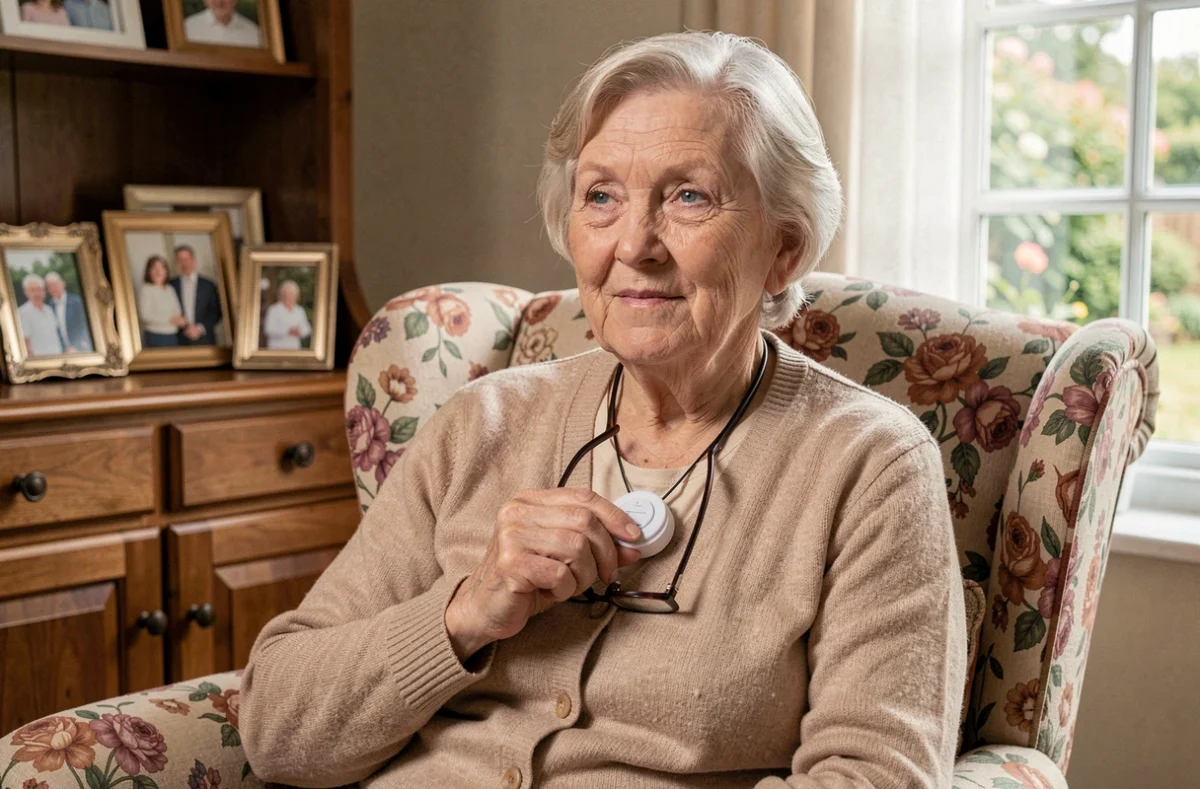
Teleassistance for seniors represents a fragmented market where offers, service levels, and financing mechanisms vary greatly from one provider to another. Between the monthly subscription, the tax credit, the APA, and potential contributions from mutual insurance or pension funds, the financing pathway remains opaque for many families. Understanding what is actually covered, and by whom, conditions the choice of the system as much as its technical characteristics.
Tax Credit and Teleassistance: What the Actual Out-of-Pocket Cost Changes
A point rarely detailed by providers concerns the basis for the tax credit. The tax credit only applies to the actual out-of-pocket cost, meaning the amount actually paid by the senior or their family after deducting all other received aids.
In practical terms, if the APA, a pension fund, or a mutual insurance covers part of the subscription, these amounts must be subtracted before calculating the tax benefit. It is not possible to declare the entire subscription to the tax authorities while also benefiting from other coverage.
This rule creates a capping effect that online simulators from teleassistance operators do not always mention. For a family anticipating a significant tax reduction, disappointment can be real if other funders are already involved. Therefore, before subscribing, it is useful to reconstruct the complete financing circuit, starting from the gross cost of the subscription to the net out-of-pocket cost after all deductions.
To better understand the connections between mutual insurance and teleassistance, you can discover Manifeste Sante and the resources compiled on this topic.
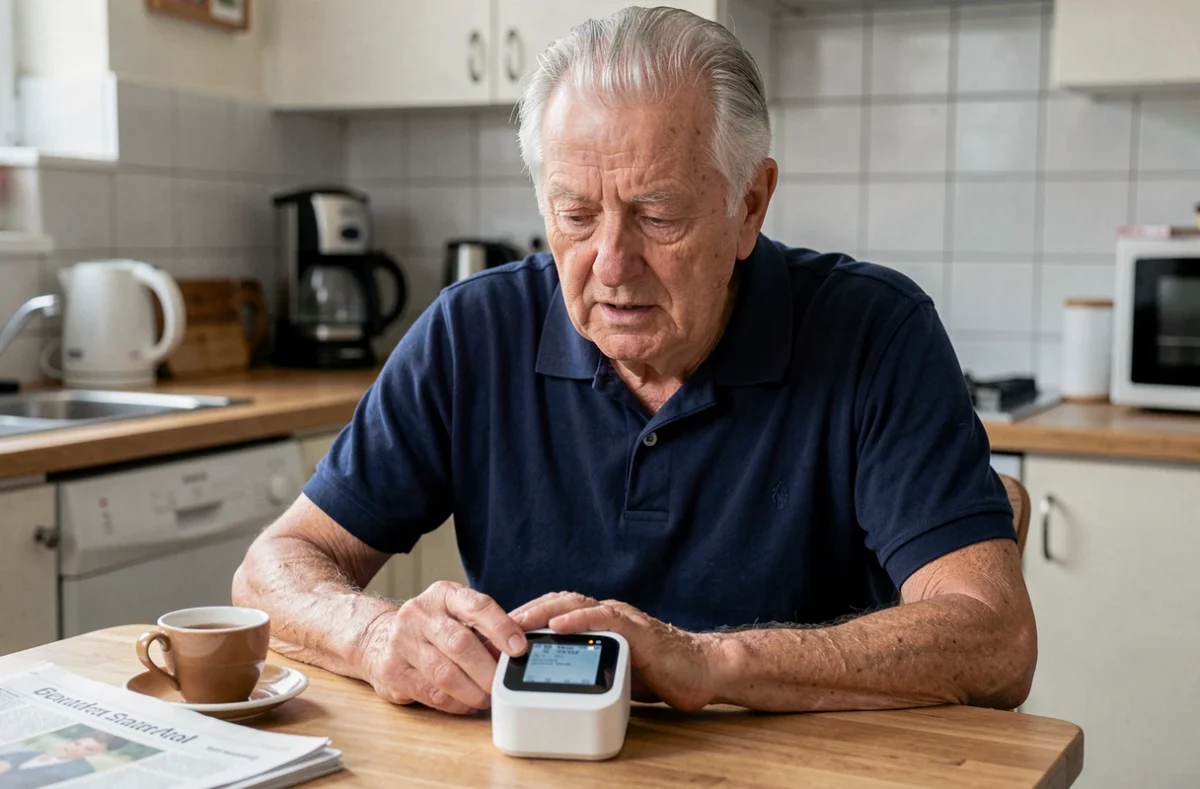
Mutual Insurance Coverage for Teleassistance: Contractual Assistance, Not Health Reimbursement
One of the most frequent confusions concerns the very nature of the coverage provided by mutual insurance. Teleassistance falls under contractual assistance, not health reimbursement. In other words, it does not appear in the standard guarantee table in the same way as a medical consultation or optical equipment.
Some mutual insurance companies include a teleassistance service in their senior contracts as an included service or a dedicated annual package. Others offer a partnership with a teleassistance operator, with a negotiated rate but without direct financial coverage. The difference between these two models is significant in terms of final cost.
What the Mutual Insurance Contract Must Specify
- The type of service: service included in the contribution, capped annual package, or simple referral to a partner at a reduced rate
- The activation conditions: minimum age, required level of dependency, necessity of a medical prescription or not
- The covered scope: only the home unit, or also mobile devices with geolocation
- The commitment duration and cancellation terms, which may differ from the teleassistance contract itself
Reading the general conditions of the mutual insurance contract remains the only reliable way to know what is actually financed. Commercial brochures often use the term “coverage” without distinguishing these different levels of intervention.
APA and Teleassistance: An Integration That Is Not Obvious
The APA does not automatically finance teleassistance. The system can be included in the personalized aid plan developed by the medico-social team of the departmental council, but the family must make an explicit request during the evaluation.
The modalities vary according to the department, the level of loss of autonomy (GIR), and the beneficiary’s resources. A senior classified in GIR 5 or GIR 6, considered relatively autonomous, does not fall under the APA. For these profiles, it is the pension funds (Carsat, MSA, Agirc-Arrco) that can offer a contribution, as part of personalized action plans subject to resource conditions specific to each organization.
This distinction between APA and pension funds is rarely explained clearly. However, it creates two distinct administrative pathways, with different interlocutors, timelines, and criteria.
Three Funders, Three Logics to Articulate
Financing teleassistance can simultaneously involve the departmental council (APA), a pension fund, and a mutual insurance. Each applies its own rules. No single window centralizes these requests, which forces the family to undertake several processes in parallel.
The main risk is underestimating the time required to obtain all the answers. The APA evaluation can take several weeks. The pension fund operates on its own timelines. The mutual insurance, for its part, may condition activation on the receipt of proof of installation of the equipment.

Choosing a Teleassistance System for Seniors: The Often Overlooked Criterion
Comparisons focus on the type of equipment (bracelet, pendant, fixed unit, connected watch) and the subscription price. These criteria matter, but the quality of the listening center determines the real effectiveness of the service.
A listening center available at all times, capable of distinguishing a serious fall from an accidental trigger, and trained in communication with disoriented or hard-of-hearing individuals, radically changes the utility of the system. Feedback from the field varies on this point according to the operators.
Here are some concrete elements to check before signing:
- The average response time for the call by the listening center, not just the simple pick-up time
- The protocol in case of no response from the senior after the alert is triggered: calling relatives, sending help, or both simultaneously
- The possibility of testing the device for a short period without commitment, to verify that the senior accepts it in daily life
Acceptance by the elderly person remains the most determining factor. A technically efficient device that is never worn protects no one. The abandonment rate of worn devices is an indicator that few providers communicate, but it is legitimate to ask for.
The choice of an appropriate teleassistance does not boil down to a price comparison or a list of features. The complexity of financing, between mutual insurance, APA, and pension funds, requires reconstructing the complete circuit before committing. And in terms of usage, it is the fit between the device and the actual habits of the senior that makes the difference between a useful subscription and a subscription forgotten in a drawer.